

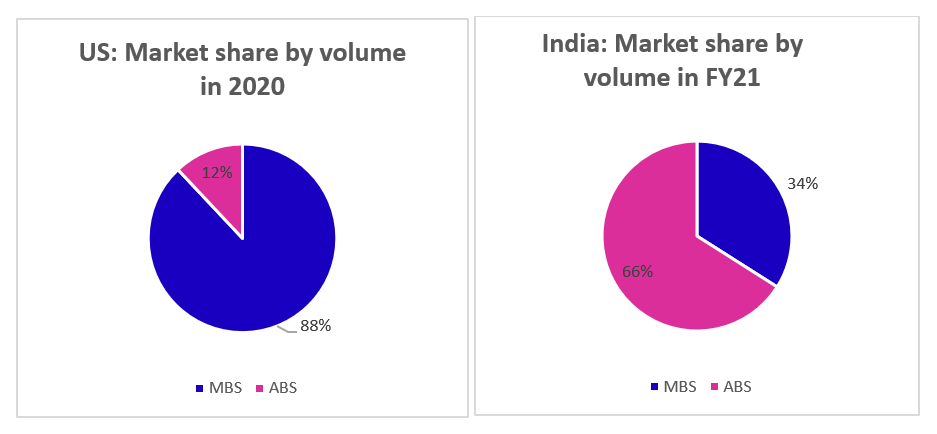
Key Takeaways Auto loans account for a significant share in India’s securitisation market. Long tenures, foreclosure complexities and lower spreads limit growth in mortgage-backed securities market. Priority sector lending (PSL) drives securitisation volumes. PSL transactions have historically accounted for nearly 75% of India’s securitisation market. Non-PSL pass through certificates (PTCs) offer at least 50 basis points higher returns than comparable PSL-backed PTCs. Market access remains concentrated as AAA-rated originators dominate, while smaller issuers face funding and pricing challenges. In the US, the asset securitisation market is dominated by mortgage backed securities (MBS). The reason for its easy take-off was the
[...]
Continue Reading
Enter your details to view the full report.
- Auto loans account for a significant share in India’s securitisation market.
- Long tenures, foreclosure complexities and lower spreads limit growth in mortgage-backed securities market.
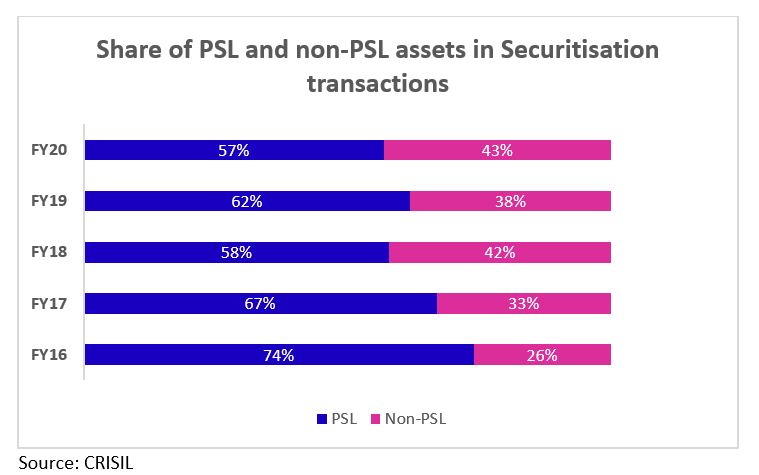
- Priority sector lending (PSL) drives securitisation volumes. PSL transactions have historically accounted for nearly 75% of India’s securitisation market.
- Non-PSL pass through certificates (PTCs) offer at least 50 basis points higher returns than comparable PSL-backed PTCs.
- Market access remains concentrated as AAA-rated originators dominate, while smaller issuers face funding and pricing challenges.
- long tenure of loans
- complex foreclosure norms
- low spreads
- RBI regulations with respect to Minimum Holding Period (MHP) — the duration (earlier 12 months) for which a bank or NBFC is required to hold the loans on its book before selling them — and Minimum Retention Ratio (MRR) — which required NBFCs to hold a minimum percentage of the book value of the loans being securitised to ensure their adequate skin in the game even after securitisation. These norms were later relaxed though where MHP was reduced to 6 months and MRR was lowered to 5% of the book value of the loans (irrespective of the tenor) being securitised in the case of MBS.
The non-banking financial institutions sold PSL pools via securitisation to banks as and when they fell short of their PSL target. Historically, PSL securitisation has accounted for three-fourths of the market. However, the market share of PSL volumes has started coming down over the past few years due to increasing interest in the non-PSL segment, particularly MBS and receivables backed by auto loans, two-wheeler loans, gold, etc., with rising participation from mutual funds, NBFCs, and Development Financial Institutions (DFIs) like MUDRA, Nabsamruddhi Finance (a subsidiary of NABARD), Small Industries Development Bank of India (SIDBI), etc. In India, NBFCs and housing finance companies act as key originators of securitization deals, while banks act as the leading investors in these pools due to their PSL targets.
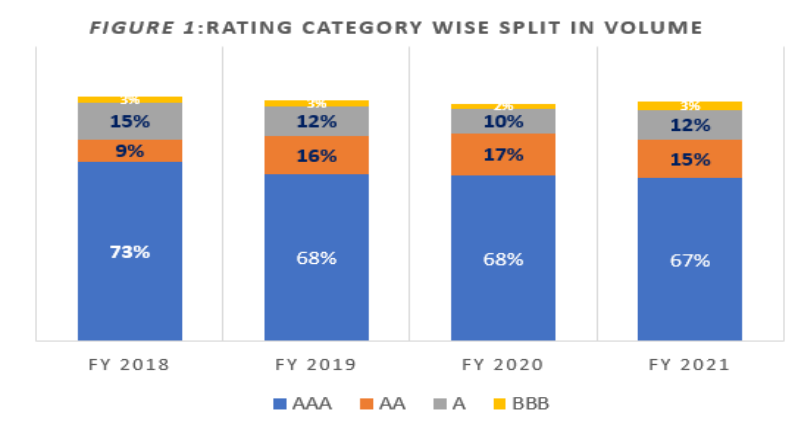
If we look at the issuers’ ratings across securitisation pools, we see that the market is highly skewed towards AAA-rated issuers in terms of volume as shown below.

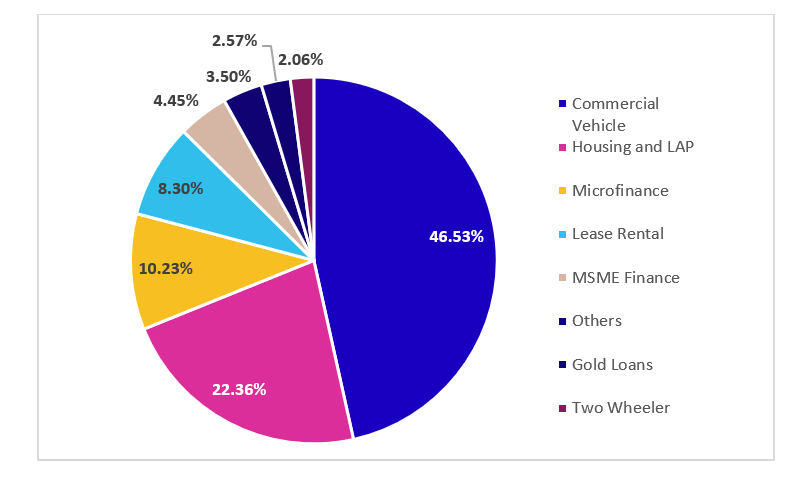
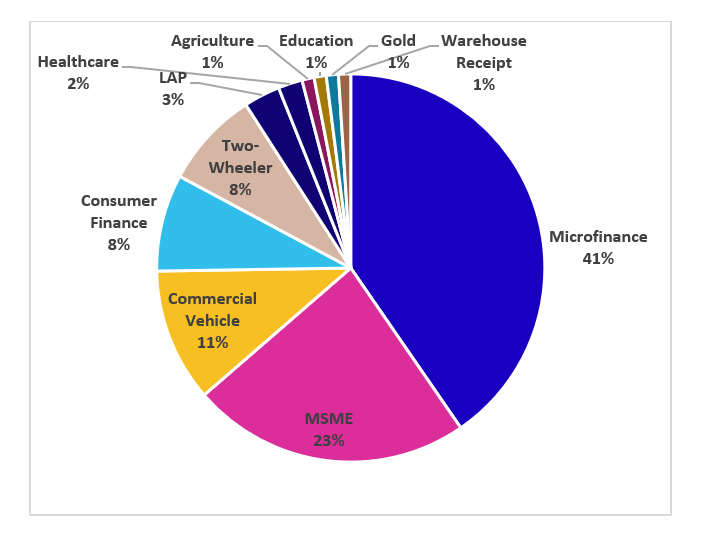
Here’s a look at the category-wise break-up of pooled assets in the Indian securitisation market (FY21):
FAQs
What is the difference between ABS and MBS?
Both are securities backed by a pool of loans. Mortgage-backed securities (MBS) are backed by home loans and other property loans. Asset-backed securities (ABS) are backed by other receivables, such as vehicle, microfinance, gold or personal loans. In India, ABS make up the larger part of the securitisation market, while MBS dominate in the US market.
Are MBS risky?
MBS cash flows are harder to predict because home loans run for long tenures, and borrowers can prepay or default years into the loan. Recovering dues through foreclosure can also take time. In India, these factors, along with thin spreads, help explain why MBS have stayed a smaller segment of the securitisation market than ABS.
What are the types of securitisation transactions in ABS market?
In India’s asset-backed securitisation (ABS) market, transactions are primarily structured through two routes:
- Pass-Through Certificates (PTCs): The originator transfers a pool of loans to a Special Purpose Vehicle (SPV), which issues PTCs to investors. Investors receive principal and interest repayments collected from the underlying borrowers.
- Direct Assignment (DA): The originator directly sells or assigns a pool of loans to a buyer, usually a bank or financial institution, which takes ownership of the loans and receives the underlying repayments.
What are the 8 priority sector lending categories?
The Reserve Bank of India (RBI) identifies eight priority sector lending (PSL) categories: Agriculture, Micro, Small and Medium Enterprises (MSMEs), Export Credit, Education, Housing, Social Infrastructure, Renewable Energy and Others. Banks are required to allocate a prescribed portion of their lending to these sectors. They can also meet their PSL targets by purchasing eligible loan portfolios from NBFCs through direct assignment or securitisation, subject to RBI guidelines.
Who is the originator in a securitisation?
The originator is the original lender that creates the loans and subsequently transfers them to a buyer or a Special Purpose Vehicle (SPV) as part of a securitisation transaction. In India, originators are typically NBFCs, housing finance companies or banks. They often continue servicing the loans by collecting EMIs from borrowers and may provide credit enhancement.
Disclaimer:
The views provided in this blog are the personal views of the author and do not necessarily reflect the views of Vivriti. This article is intended for general information only and does not constitute any legal or other advice or suggestion. This article does not constitute an offer or an invitation to make an offer for any investment.